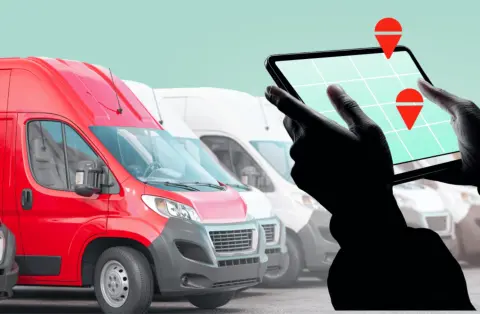



As environmental regulations tighten and sustainability becomes a business imperative, understanding and managing your fleet's carbon footprint has never been more critical. Whether you operate a small delivery fleet or manage hundreds of commercial vehicles, calculating your emissions is the first step toward meaningful reduction and compliance with UK regulations.
In this comprehensive guide, we'll walk you through everything you need to know to measure, report, and reduce your fleet's carbon footprint.
What is a fleet carbon footprint?
Your fleet's carbon footprint is the total greenhouse gas (GHG) emissions from your vehicles over a specific period. These emissions are typically measured in tonnes of carbon dioxide equivalent (tCO2e), which accounts for various greenhouse gases, including carbon dioxide, methane, and nitrous oxide.
According to corporate sustainability reporting frameworks, fleet emissions are categorised into three scopes:
Scope 1: Direct emissions from fuel combustion in company-owned vehicles and any refrigerant gas leaks.
Scope 2: Indirect emissions from electricity used to charge electric company vehicles.
Scope 3: Other indirect emissions, including upstream fuel production, business travel, and employee commuting.
For most fleets, Scope 1 emissions from fuel consumption represent the largest contributor to their carbon footprint.
Why measuring your fleet's carbon footprint matters
Regulatory compliance
UK regulations for fleet carbon reporting are becoming increasingly stringent. The Streamlined Energy and Carbon Reporting (SECR) framework requires qualifying companies to disclose their energy use and carbon emissions annually. Organisations with more than 250 employees or specific turnover thresholds must report their Scope 1 and 2 emissions, including those from company vehicles.
Cost reduction
Understanding your carbon footprint reveals inefficiencies in your fleet operations. Higher emissions typically correlate with higher fuel costs, meaning that reducing your carbon footprint often leads to significant cost savings.
Competitive advantage
Demonstrating environmental responsibility can strengthen your brand reputation, attract environmentally conscious customers, and help you win tenders that require sustainability credentials.
Future-proofing your business
With the UK government's commitment to reach net-zero emissions by 2050 and the ban on new petrol and diesel vehicle sales from 2030, early action on fleet decarbonization positions your business for long-term success.
Step-by-step guide to calculating your fleet's carbon footprint
Step 1: Gather your vehicle data
Start by creating a comprehensive inventory of your fleet:
Total number of vehicles.
Vehicle types (cars, vans, HGVs).
Fuel types (petrol, diesel, hybrid, electric).
Annual mileage per vehicle.
Fuel consumption records.
According to fleet management data, accurately tracking these metrics is essential for accurate carbon footprint calculations.
Step 2: Collect fuel consumption data
The most accurate method for calculating fleet emissions uses actual fuel consumption data. Collect:
Litres of fuel purchased per vehicle.
Fuel card transaction records.
Mileage logs.
Electricity consumption for electric vehicles (in kWh).
Pro tip: Modern fleet management systems and fuel cards automate fuel consumption tracking, making data collection significantly easier and more accurate.
Step 3: Apply emission factors
Once you have your fuel consumption data, multiply it by the appropriate emission factors. The UK government publishes official conversion factors annually through the Department for Environment, Food and Rural Affairs (DEFRA).
Example calculation for diesel vehicles:
Annual diesel consumption: 10,000 litres
DEFRA emission factor for diesel: 2.69 kg CO2e per litre
Total emissions: 10,000 × 2.69 = 26,900 kg CO2e (26.9 tonnes CO2e)
For electric vehicles:
Annual electricity consumption: 5,000 kWh
Grid electricity emission factor: 0.21 kg CO2e per kWh
Total emissions: 5,000 × 0.21 = 1,050 kg CO2e (1.05 tonnes CO2e)
Step 4: Calculate total fleet emissions
Sum the emissions from all vehicles to determine your total fleet carbon footprint. Remember to include: All fuel types used, electricity for EV charging and refrigerant leaks (if applicable).
Step 5: Analyse and benchmark
Compare your results against:
Previous years' performance.
Industry benchmarks.
Your reduction targets.
Calculate emissions intensity metrics such as: CO2e per vehicle, CO2e per kilometre travelled and CO2e per employee.
How electric vehicles impact your fleet's carbon footprint
The transition to electric vehicles (EVs) represents one of the most effective strategies for reducing fleet emissions. Research shows that EVs can reduce carbon emissions by 50-70% compared to conventional vehicles, even when accounting for emissions from electricity generation.
Key benefits of EV adoption
Dramatically lower emissions: Battery electric vehicles (BEVs) produce zero tailpipe emissions, with total lifecycle emissions significantly lower than those of diesel or petrol vehicles.
Reduced operational costs: EVs have lower fuel costs (electricity vs petrol/diesel) and require less maintenance due to fewer moving parts.
Compliance with future regulations: As the UK phases out new petrol and diesel vehicles from 2030, early EV adoption ensures your fleet remains compliant.
Calculating EV emissions accurately
When measuring EV carbon footprint, consider:
Charging location emissions: Emissions vary based on whether vehicles charge at the workplace, at home, or at public charging stations.
Grid carbon intensity: The UK's electricity grid is becoming progressively cleaner, meaning EV emissions decrease over time.
Renewable energy: If your business uses renewable electricity, your EV emissions can be near-zero.
According to sustainability reporting data, companies should track both location-based emissions (using grid average factors) and market-based emissions (accounting for purchased renewable energy).
UK regulations for fleet carbon reporting
Streamlined Energy and Carbon Reporting (SECR)
Introduced in April 2019, SECR requires large UK companies to report:
Annual energy consumption (in kWh).
Associated greenhouse gas emissions.
Intensity metrics (emissions per relevant business metric).
Energy efficiency measures taken.
Who must comply:
Quoted companies.
Large unquoted companies (more than 250 employees and turnover exceeding £36 million or balance sheet exceeding £18 million).
Large LLPs meet similar thresholds.
The Task Force on Climate-related Financial Disclosures (TCFD)
Premium listed companies must now report climate-related risks and opportunities, including transition plans for fleet decarbonization.
Future regulations
The UK government continues to strengthen environmental reporting requirements. Staying ahead of compliance requirements by implementing robust carbon-tracking systems now will save time and resources later.
Proven strategies to reduce your fleet's carbon footprint
1. Optimise route planning and journey efficiency
One of the quickest wins for reducing fleet emissions is improving route efficiency. By planning journeys more effectively, you can: Reduce total miles driven, minimise fuel consumption, decrease vehicle wear and tear and improve delivery times.
Use our site locator to plan your journeys more efficiently – finding optimal routes between locations can reduce unnecessary mileage and associated emissions by up to 20%.
2. Transition to electric and low-emission vehicles
Develop a phased approach to fleet electrification:
Immediate: Replace high-mileage vehicles with EVs or plug-in hybrids.
Short-term: Aim for at least 30% of new-vehicle orders to be battery-electric.
Long-term: Set targets for full fleet electrification by 2030-2035.
Consider vehicle usage patterns when selecting replacements. Urban delivery vehicles with predictable routes are ideal candidates for early electrification.
3. Implement driver training programs
Driver behaviour significantly impacts fuel consumption and emissions. Training programs focusing on:
Smooth acceleration and braking
Optimal speed management
Can reduce fuel consumption by 10-15%.
4. Maintain vehicles properly
Regular maintenance ensures vehicles operate at peak efficiency:
Keep tyres properly inflated (underinflated tyres increase fuel consumption by up to 3%).
Service engines according to the manufacturer's schedules.
Replace air filters regularly.
Use recommended fuel and oil grades.
5. Right-size your fleet
Analyse vehicle utilisation rates to identify:
Underutilised vehicles that could be removed.
Opportunities for vehicle sharing.
Alternatives to company cars (car allowances, pool vehicles).
According to corporate fleet policies, providing alternatives to company cars wherever possible can significantly reduce overall fleet emissions.
6. Adopt telematics and fleet management technology
Modern fleet management systems provide:
Real-time fuel consumption monitoring.
Emissions tracking and reporting.
These tools enable data-driven decisions and continuous improvement in fleet efficiency.
7. Consider alternative fuels
For vehicles that cannot yet transition to electric:
Hydrotreated Vegetable Oil (HVO) can reduce emissions by up to 90%.
Compressed Natural Gas (CNG) offers lower emissions than diesel.
Hybrid vehicles provide interim emission reductions.
8. Implement a green fleet policy
Establish clear guidelines for:
Maximum CO2 emissions for new vehicle purchases.
Preferred fuel types.
Minimum contract durations (longer contracts reduce lifecycle emissions).
EV charging infrastructure requirements.
Tools and resources for fleet carbon management
Carbon calculation tools
DEFRA conversion factors: Official UK government emission factors updated annually.
Fleet management software: Automated tracking and reporting solutions.
Reporting frameworks
Organisations like Edenred follow established methodologies for carbon footprint assessment, ensuring consistency and accuracy in emissions reporting.
Industry benchmarks
Compare your performance against sector-specific benchmarks to identify opportunities for improvement and demonstrate progress to stakeholders.
Common challenges and how to overcome them
Challenge 1: Data collection
Solution: Implement automated systems such as fuel cards and telematics to capture accurate, real-time data without manual intervention.
Challenge 2: Scope 3 emissions complexity
Solution: Start with Scope 1 and 2 emissions, then gradually expand to include upstream fuel production and employee commuting as your processes mature.
Challenge 3: EV charging infrastructure
Solution: Develop a phased installation plan for workplace charging, partner with employees for home charging solutions, and leverage public charging networks.
Challenge 4: Balancing costs and sustainability
Solution: Focus on the total cost of ownership (TCO) rather than upfront costs. EVs typically have higher purchase prices but lower operational costs, resulting in savings over the vehicle lifecycle.
The future of fleet carbon management
The fleet industry is undergoing rapid transformation. Key trends include:
Accelerating electrification
With over one million electric charging points now accessible across Europe, the infrastructure supporting EV adoption continues to expand rapidly, making fleet electrification increasingly practical.
Advanced analytics
AI-powered fleet management systems will provide predictive insights, optimising routes, maintenance schedules, and vehicle selection to automatically minimise emissions.
Integrated mobility solutions
Future fleet management will encompass multi-modal transportation, combining owned vehicles, car sharing, public transport, and micromobility solutions to minimise overall environmental impact.
Carbon pricing
As carbon pricing mechanisms expand, the financial incentive to reduce fleet emissions will strengthen, making low-emission fleets not just environmentally responsible but economically essential.
Taking action today
Calculating your fleet's carbon footprint is not a one-time exercise but an ongoing process of measurement, analysis, and improvement. By following the steps outlined in this guide, you can:
Establish your baseline: Understand your current emissions profile
Set reduction targets: Define ambitious but achievable goals aligned with UK net-zero commitments
Implement quick wins: Start with route optimisation and driver training for immediate impact
Plan long-term transformation: Develop a strategic roadmap for fleet electrification
Monitor and report: Track progress regularly and communicate results to stakeholders
Remember, every journey begins with a single step. Whether you're just starting to measure your fleet's carbon footprint or looking to accelerate your decarbonization efforts, the time to act is now.
Understanding how to calculate your fleet's carbon footprint empowers you to make informed decisions about vehicle selection, operational practices, and long-term strategy. As UK regulations continue to evolve and stakeholder expectations increase, businesses with robust carbon management systems will be best positioned for success.
By combining accurate measurement with strategic reduction initiatives – from route optimisation with our site locator to transitioning to electric vehicles – you can significantly reduce your fleet's environmental impact while improving operational efficiency and lowering costs.
The transition to a low-carbon fleet is not just an environmental imperative; it's a business opportunity. Companies that embrace this change early will benefit from lower operating costs, enhanced reputation, regulatory compliance, and competitive advantage in an increasingly sustainability-focused marketplace.