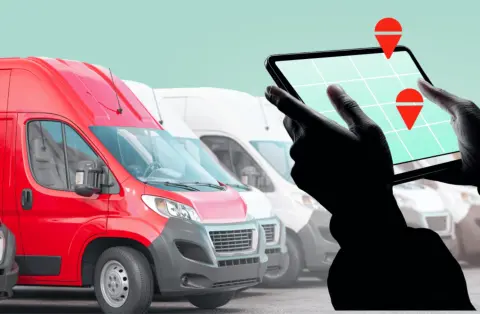



Last-mile delivery is the final stage of a product’s journey, taking goods from a warehouse, distribution centre or local depot to their final destination, usually a customer’s home or business.
For businesses, this final stage can be one of the most challenging and expensive parts of the delivery process. Rising fuel costs, traffic congestion, tight delivery windows and growing customer expectations can all make last-mile delivery difficult to manage efficiently. Improving last-mile efficiency helps reduce unnecessary mileage, control fleet costs, make better use of vehicles and deliver a reliable customer experience.
In this guide, we’ll explain what last-mile delivery means, how it works, the challenges businesses face and how you can optimise your last-mile delivery strategy.
What is last-mile delivery?
Last-mile delivery refers to the final stage of the delivery process, where goods are transported from a distribution centre, warehouse or local depot to their final destination, typically a customer’s home or business.
Despite the term “last mile”, this journey doesn’t necessarily cover one mile. It can range from a short distance in a busy urban area to several miles in a rural location. What makes it the “last mile” is that it represents the final leg of the product’s journey to its destination.
What does last-mile delivery mean?
To understand the meaning of last-mile delivery, it helps to look at where it fits into the wider supply chain:
First mile: Goods are collected from the manufacturer or supplier and transported to a distribution centre.
Middle mile: Products are transported between warehouses, distribution centres or regional hubs.
Last mile: Goods are transported from the local hub or depot to their final destination.
The last mile can be particularly challenging because, unlike the earlier stages of the supply chain, deliveries are often made individually to multiple locations.
Why is it called the “last mile”?
The term “last mile” originally came from telecommunications, where it described the challenge of connecting individual homes and businesses to the main network infrastructure.
The logistics industry adopted the term to describe the final connection between a distribution point and the end customer.
Common last-mile delivery models
Last-mile delivery can take several forms depending on the business and its customers. Common models include:
Home delivery: Goods are delivered directly to a customer’s residential address.
Business delivery: Products are delivered to offices, commercial premises or other business locations.
Click and collect: Customers order online and collect their goods from a store, collection point or locker.
Same-day delivery: Orders are delivered on the day they are placed.
Scheduled delivery: Customers select a specific delivery date or time window.
Different delivery models create different operational requirements, so businesses need to consider factors such as route planning, vehicle capacity, delivery windows and customer availability.
How does last-mile delivery work?
Understanding the operational mechanics of last-mile delivery helps identify opportunities for optimisation and cost reduction.
The last-mile delivery process
While the exact process varies between businesses, a typical last-mile delivery journey involves several key stages.
1. Order processing and preparation
The process begins when an order is received. The goods are picked, packed, and labelled before being sorted by destination.
2. Route planning
Deliveries are grouped, and routes are planned based on factors such as location, traffic, delivery windows, vehicle capacity and driver availability.
3. Loading and dispatch
Goods are loaded into the appropriate vehicles, with parcels typically arranged to make them easy for drivers to access in delivery order.
4. Transportation
Drivers follow their planned routes, making multiple stops while adapting to traffic, road closures, parking restrictions and other unexpected delays.
5. Delivery
At each destination, the driver completes the delivery and records proof of delivery where required. This could include a signature, a photograph, or a digital confirmation.
6. Failed deliveries
If a delivery cannot be completed, the business may need to arrange a redelivery or direct the customer to a collection point. This can create additional mileage and costs.
7. Returns
The last-mile process can also work in reverse, with businesses collecting returned goods and transporting them back to a warehouse, depot or fulfilment centre.
Technology enabling last-mile delivery
Technology plays an increasingly important role in helping businesses manage last-mile delivery efficiently.
Route optimisation software can help calculate efficient delivery sequences and reduce unnecessary mileage.
GPS and telematics provide visibility over vehicle locations, journeys and driver behaviour.
Mobile applications allow drivers to access delivery information and record proof of delivery.
Customer tracking systems provide updates on delivery progress and estimated arrival times.
Automated notifications can keep customers informed about delivery status.
Electronic proof of delivery replaces paper-based processes with digital signatures, photographs and confirmations.
For businesses operating delivery fleets, combining route optimisation with telematics can provide greater visibility over how vehicles are being used and where improvements can be made.
You can learn more about Right Fuel Card's fleet telematics here.
Key stakeholders in last-mile delivery
Several parties are involved in the last-mile delivery ecosystem:
Retailers and e-commerce businesses: Initiate deliveries and set customer expectations.
Third-party logistics providers (3PLs): Specialised companies managing delivery operations for multiple clients.
Courier services: Companies dedicated to parcel delivery.
Gig-economy drivers: independent contractors using their own vehicles for deliveries.
Technology providers: Companies supplying software, tracking systems, and optimisation tools.
Customers: The end recipients whose expectations drive service requirements.
Why is last-mile delivery important?
Last-mile delivery can have a significant impact on a business’s costs, customer experience and overall reputation. For e-commerce businesses in particular, the delivery experience can influence whether customers choose to buy again.
Customer experience
Customers increasingly expect deliveries to be fast, reliable and convenient. Accurate delivery windows, real-time tracking and proactive communication can all help create a better customer experience.
Delivery costs
Last-mile delivery can be expensive because vehicles often make multiple stops across different locations. Fuel, driver wages, vehicle maintenance and additional mileage can all contribute to the overall cost.
This makes efficient route planning and fleet management particularly important for businesses looking to control delivery costs.
Business reputation
Delivery is often one of the most visible parts of the customer experience. Late, damaged or missed deliveries can negatively affect customer satisfaction and a company’s reputation, while reliable delivery can help build trust.
Competitive advantage
For many e-commerce businesses, fast and flexible delivery has become an important way to differentiate themselves from competitors.
Sustainability
Reducing unnecessary mileage and improving vehicle efficiency can also help businesses reduce fuel consumption and emissions.
Common challenges in last-mile delivery
Despite its importance, last-mile delivery can be difficult and expensive to manage. Common challenges include:
Rising operational costs
Fuel, vehicle maintenance, insurance, wages, and other fleet expenses can quickly add up, particularly when vehicles complete multiple deliveries every day.
Traffic and congestion
Urban deliveries can be affected by congestion, road closures, parking restrictions and access limitations. Delays can mean fewer deliveries are completed during a driver's shift.
Inefficient routes
Poor route planning can result in unnecessary mileage, longer journey times and increased fuel consumption.
Businesses can use fleet route optimisation to identify more efficient routes and reduce unnecessary journeys.
Failed deliveries
If a customer isn't available or an address is incorrect, drivers may need to make another journey. This increases mileage and operating costs while taking up valuable driver time.
Fleet and driver management
Managing multiple vehicles and drivers can become increasingly difficult as a delivery operation grows. Fleet managers need visibility over vehicle locations, mileage, fuel consumption and driver performance.
Fuel consumption
Frequent stops, starts, idling and short journeys can all affect fuel efficiency. For delivery fleets covering high annual mileage, even small improvements in MPG can make a meaningful difference to operating costs.
You can read more about why short journeys can cost more than you think.
How to optimise your last-mile delivery strategy
Improving last-mile efficiency involves looking at the entire delivery operation, from route planning and fuel management to driver performance and vehicle utilisation.
1. Optimise delivery routes
Efficient route planning can help businesses reduce unnecessary mileage and make better use of driver time.
Route optimisation software can consider factors such as:
Traffic conditions.
Delivery locations.
Time windows.
Vehicle capacity.
Driver availability.
Road restrictions.
For businesses completing multiple deliveries every day, even small reductions in mileage can add up to significant savings over time.
2. Use telematics and fleet tracking
Telematics gives fleet managers greater visibility over how their vehicles are being used.
Depending on the system, businesses can monitor vehicle locations, mileage, driver behaviour, idling, journey history and other performance data.
This information can help identify inefficient driving, unnecessary journeys and opportunities to improve fleet performance.
3. Manage fuel costs
Fuel is a high operating cost for many delivery fleets, making effective fuel management an important part of last-mile optimisation.
Businesses can improve fuel efficiency by:
Reducing unnecessary mileage.
Minimising excessive idling.
Training drivers in fuel-efficient driving.
Maintaining vehicles properly.
Choosing appropriate vehicles for different routes.
Monitoring fuel consumption.
A fuel card can also help businesses simplify fuel purchasing and gain greater visibility over fleet fuel expenditure.
4. Improve first-time delivery success
Failed deliveries create additional mileage, driver time and fuel costs.
Businesses can reduce failed deliveries by providing customers with accurate delivery windows, sending tracking updates and allowing customers to specify delivery preferences.
5. Improve vehicle utilisation
Making better use of each vehicle can help reduce the cost per delivery.
Businesses can consider combining deliveries and collections, optimising vehicle loads and matching vehicle size to typical delivery requirements.
6. Manage grey fleet vehicles
Some businesses use employees' own vehicles for deliveries or business journeys. This creates additional considerations around insurance, vehicle standards, mileage tracking and duty of care.
Our guide to grey fleet management explains how businesses can manage these risks more effectively.
7. Measure performance
Businesses should track key metrics to understand whether their last-mile strategy is working.
Useful KPIs include:
Cost per delivery.
Miles per delivery.
Deliveries per driver.
On-time delivery rate.
Failed delivery rate.
Fuel consumption.
Vehicle utilisation.
Regularly reviewing these figures can help fleet managers identify inefficiencies and measure improvements over time.
The future of last-mile delivery
Last-mile delivery continues to evolve as businesses look for ways to reduce costs, improve customer experience, and operate more sustainably. Technology and changing consumer expectations are likely to shape how delivery fleets operate in the years ahead.
Electric delivery fleets
The transition towards electric vans is particularly relevant for businesses operating urban and regional delivery routes.
Electric vehicles can offer lower running costs and reduced tailpipe emissions, although businesses need to consider factors such as vehicle range, charging infrastructure, payload requirements and journey patterns.
As more businesses transition their fleets, access to convenient charging will become an increasingly important part of fleet management.
AI and smarter route planning
Artificial intelligence is already being used to improve areas such as demand forecasting, route planning and delivery time predictions.
As these systems become more sophisticated, businesses may be able to respond more quickly to traffic, changing delivery requirements and fluctuations in demand.
Autonomous delivery
Autonomous vehicles and delivery robots are being developed and tested for last-mile applications. While widespread adoption still faces regulatory, technical and practical challenges, the technology could eventually change how some deliveries are completed.
Micro-fulfilment
Bringing inventory closer to customers through smaller, local fulfilment centres can reduce delivery distances and support faster delivery times.
However, higher property costs and the complexity of managing stock across multiple locations mean this approach won't suit every business.
More sustainable delivery
Sustainability will continue to influence last-mile delivery. Alongside electric vehicles, businesses can reduce emissions by consolidating deliveries, improving route efficiency, and reducing unnecessary vehicle miles travelled.
Conclusion: Mastering last-mile delivery for business success
Last-mile delivery is the final stage of the supply chain, but it can have a significant impact on a business's costs, customer experience and overall efficiency.
For businesses operating delivery fleets, improving last-mile performance means looking beyond simply finding the quickest route. Better route planning, telematics, fuel management, vehicle utilisation and driver performance can all contribute to a more efficient operation.
By using data to understand where time, mileage and fuel are being spent, businesses can identify opportunities to reduce unnecessary costs while continuing to provide reliable deliveries.
Right Fuel Card can help businesses take greater control of their fleet fuel spending, simplifying fuel management and supporting more efficient fleet operations.
Find out how Right Fuel Card can help your business manage its fuel costs.
Frequently asked questions about last-mile delivery
What is last-mile delivery?
Last-mile delivery is the final stage of the delivery process, where goods are transported from a warehouse, distribution centre or local depot to their final destination.
What does last-mile delivery mean?
The term last-mile delivery refers to the final leg of a product's journey before reaching its end customer. Despite the name, this journey doesn't necessarily have to be one mile.
Why is last-mile delivery important?
Last-mile delivery is important because it can significantly impact delivery costs, customer satisfaction, and operational efficiency. For e-commerce businesses, it can also influence the overall customer experience.
What are the biggest challenges of last-mile delivery?
Common challenges include rising fuel and operating costs, traffic congestion, inefficient routes, failed deliveries, driver management and increasing customer expectations.
How can businesses reduce last-mile delivery costs?
Businesses can reduce last-mile delivery costs by optimising routes, reducing unnecessary mileage, monitoring fuel consumption, improving vehicle utilisation and using telematics to identify inefficiencies.
How does telematics help with last-mile delivery?
Telematics provides information about vehicles and journeys, including location, mileage and driver behaviour. This can help businesses identify inefficiencies, improve vehicle utilisation and make more informed fleet management decisions.