


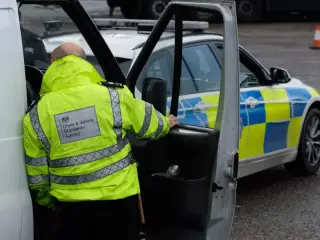
Keeping your fleet safe, compliant, and on the road is a big part of running any transport or logistics operation. And with the DVSA sharpening its focus on roadside inspections in 2025, fleet operators need to know exactly what to expect and how to stay prepared.
DVSA roadside inspections aren’t new, but the way they’re targeted, recorded, and acted on continues to evolve. Failing a check can lead to costly delays, prohibitions, penalties, or even damage to your Operator Compliance Risk Score (OCRS). So, understanding how these inspections work is essential for strong fleet risk management.
What is a DVSA roadside check?
A DVSA roadside check is an inspection carried out by the Driver and Vehicle Standards Agency on commercial vehicles, company cars, vans, HGVs, buses, and coaches to ensure they meet UK safety and compliance standards.
Many operators still refer to them as VOSA roadside checks or ask, "What is a VOSA check?" That’s because the DVSA was formed in 2014 after a merger between the Driving Standards Agency (DSA) and the Vehicle and Operator Services Agency (VOSA). The checks themselves are essentially the same, just under a new name.
A typical DVSA inspection may include:
A full walk-around examination.
Safety and mechanical checks.
Document and licence verification.
Tachograph and drivers’ hours assessment.
Load security checks.
Vehicle weight checks are conducted if suspected of being overloaded.
For fleets, many elements of a DVSA roadside check relate directly to daily walkaround routines and good maintenance processes. If you want a refresher, see our guide to HGV walkaround checks and our Vehicle inspection checklist.
Who carries out DVSA checks?
DVSA officers conduct the checks, and many of them previously worked under the old VOSA structure. These officers are specially trained enforcement staff with the authority to stop and inspect vehicles at the roadside.
Where can inspections be carried out?
At DVSA-approved testing sites.
At designated roadside checkpoints.
On motorways.
At ports.
At weighbridges.
In targeted enforcement zones.
You’ll usually see DVSA officers in marked vehicles, often positioned at strategic roadside locations. Increasingly, they also use ANPR (Automatic Number Plate Recognition) to identify vehicles linked to poor compliance history or potential risks.
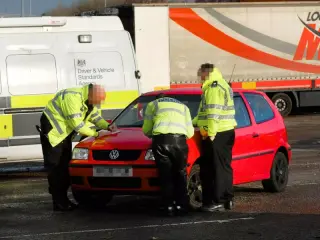
Why are DVSA roadside inspections carried out?
The goal is simple: to keep unsafe or non-compliant vehicles off the road.
Roadside checks allow DVSA to:
Identify dangerous defects.
Tackle driver fatigue and hours breaches.
Prevent overloading.
Ensure vehicles meet emission standards.
Verify that operators are meeting licence obligations.
Hold businesses accountable for poor safety practices.
For fleet operators, good compliance isn’t just about ticking regulatory boxes; it’s a core part of protecting drivers, reducing breakdowns, and improving operational efficiency.
Can DVSA pull you over in a car?
Yes - DVSA officers can pull you over in a car, and they often use marked or unmarked vehicles fitted with flashing lights and "STOP" signs.
They generally target:
Vans.
Company cars.
Towing vehicles.
HGVs.
Buses and coaches.
While private motorists are less likely to be stopped, DVSA still has the authority to halt any vehicle if it suspects a safety issue.
What happens during a DVSA roadside inspection?
A DVSA roadside check can be quick and simple, or detailed and time-consuming, depending on the vehicle, its condition, and the operator’s compliance history.
Here’s what a typical inspection involves:
1. Vehicle Condition Checks
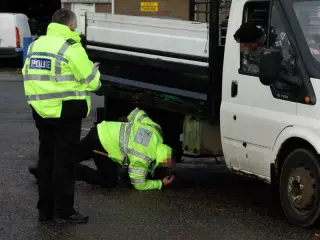
DVSA officers assess critical safety components, including:
Brakes and brake lines.
Tyres and tread depth.
Lights, indicators, reflectors, and mirrors.
Suspension.
Steering.
Emissions.
Windscreen condition.
Coupling and trailer connections.
If defects are spotted, the officer may issue a prohibition or flag issues for further investigation.
For support, refer to our Vehicle inspection checklist.
2. Driver Checks
DVSA will check that the driver is:
Competent and fully licensed.
Working within legal hours.
Using their tachograph correctly (where required).
Up to date with training such as Driver CPC.
Incorrect or missing records are among the most common causes of penalties.
3. Load and Weight Checks
Load security remains a major focus for DVSA in 2025.
Officers may:
Examine how loads are secured.
Check for correct straps and restraints.
Weigh the vehicle if it’s suspected of being overloaded.
Overloading is treated seriously because it significantly increases braking distance and risk of accidents.
4. Documentation and Compliance Checks
DVSA officers may ask to see:
Operator licence details.
Maintenance records.
Previous defect reports.
Insurance documents.
Tachograph printouts.
Training records.
If the paperwork doesn’t add up, that can lead to further action.
What happens if you fail a DVSA roadside check?
The consequences depend on the severity of the issue, but DVSA has the authority to take immediate action.
You may face:
Immediate prohibitions (PG9)
These prevent the vehicle from moving until defects are repaired.
Immediate prohibition = vehicle must stop right away
Delayed prohibition = vehicle can return to base for repairs
Fixed penalties or fines
For offences such as:
Driver hours breaches.
Overloading.
Using a defective vehicle.
Tachograph offences.
Points on a licence or prosecution
Serious offences may go to court.
Impact on your OCRS
Your Operator Compliance Risk Score shows how likely you are to be non-compliant. Failing roadside checks can push you into the red category, making you a target for more frequent future inspections.
Further DVSA monitoring
Repeated issues may lead to a full investigation, maintenance audits, or visits to your operating centre.
This is why regular walkaround checks (link) and reliable inspection routines are so important.
Where do DVSA roadside checks take place?
In 2025, roadside checks are typically found at:
Motorway service stations.
Lay-bys with marked enforcement zones.
Ports and transport hubs.
Weighbridges.
ANPR-triggered checkpoints.
Major A-roads and logistics corridors.
DVSA uses risk-based targeting, so operators with poor compliance records are far more likely to be stopped.
How fleet operators can reduce the risk of failing a DVSA check
Good compliance is all about being consistent. Here are the practical steps that protect your fleet:
1. Complete daily walkaround checks
These are your first line of defence.
(Our guide: HGV walkaround checks)
2. Use a structured vehicle inspection checklist
Prevents small issues from becoming major defects.
(Our guide: vehicle inspection checklist)
3. Keep maintenance records organised and up to date
This shows DVSA you take compliance seriously.
4. Make sure drivers understand their responsibilities
Tachographs, load security, and reporting defects are all part of their role.
5. Train drivers on how to respond to a DVSA stop
A calm, confident driver makes the inspection smoother.
6. Act quickly on defects
Fixing issues early reduces the risk of prohibitions and delays.
DVSA roadside check checklist for fleet operators (2025)
A quick, practical summary you can include in driver packs or fleet handbooks:
Daily walkaround checks completed
Defects reported and repaired promptly
Tyres, brakes, lights, and mirrors are in good condition
Records, licences, and tachograph data are accurate
Load safely secured
Vehicles within legal weight limits
Documents kept organised and accessible
Drivers are fully trained on safety and compliance
Following these steps will help you stay compliant - and stay off the DVSA’s watchlist.
Final thoughts
DVSA roadside checks are a normal part of operating a fleet in the UK, but they don’t have to be disruptive. With strong processes, regular inspections, and confident drivers, most checks are quick and straightforward.
For fleet managers, good preparation is the best way to protect operations, avoid penalties, and build a solid compliance record.
If you want to strengthen your fleet management processes, explore our guides on daily checks, maintenance, and compliance - they’re designed to help businesses stay safe and keep moving.


