



Why spotting vehicle warning signs early matters
Vehicle warning signs before breakdown are early indicators that a car or van needs attention before a mechanical failure occurs. These warning signs often appear days or weeks before a breakdown, giving drivers and fleet managers time to act.
Catching the early signs of vehicle breakdown isn’t just good practice; it’s one of the most effective ways to reduce downtime, protect drivers, and control operating costs.
The cost of unexpected vehicle breakdowns
Unexpected breakdowns typically result in recovery costs, emergency repairs, lost productivity, and missed deliveries.
For fleets, a single breakdown can disrupt schedules across multiple vehicles. Responding early to the signs your vehicle needs maintenance allows repairs to be planned rather than forced.
Safety risks of ignoring early warning signs
Ignoring fleet vehicle maintenance warning signs increases the risk of accidents, roadside failures, and vehicle damage. Brake wear, tyre damage, or engine faults can worsen rapidly if left unchecked.
Ignoring fleet vehicle maintenance warning signs increases the likelihood of accidents, particularly when faults develop at speed or under load.
How preventive maintenance supports fleet efficiency
Preventive maintenance is most effective when it is based on real-world warning signs rather than fixed service dates alone.
By acting on vehicle warning signs before breakdown, fleets can:
Reduce unplanned downtime.
Improve fuel efficiency.
Extend vehicle lifespan.
Common warning signs your vehicle needs attention
Some of the most important signs your vehicle needs maintenance are also the easiest to spot if drivers know what to look for.
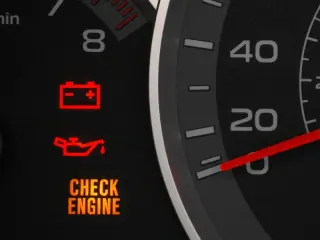
Dashboard warning lights you should never ignore
Warning lights exist for a reason. Engine management, oil pressure, battery, and brake system lights all signal faults that need attention. While every light means stop immediately, none should be ignored.
Persistent or flashing lights are clear vehicle warning signs of an impending breakdown and should be reported as soon as possible.
Unusual noises from the engine or brakes
Common warning noises include:
Grinding or squealing brakes.
Knocking from the engine.
Whining or rattling under acceleration.
These sounds are often early warning signs of a vehicle breakdown.
Difficulty starting or frequent stalling
If a vehicle struggles to start, stalls unexpectedly, or cuts out at junctions, it may indicate battery, fuel, or ignition issues. These problems rarely fix themselves and often worsen over time.
Poor fuel efficiency or sudden MPG drops
A sudden drop in MPG is often a symptom of an underlying mechanical issue, such as tyre pressure loss, engine inefficiency, or sensor faults.
Monitoring fuel usage helps fleets spot vehicle warning signs before a breakdown that might otherwise go unnoticed.
Vibrations, pulling, or changes in handling
Steering vibrations, pulling to one side, or unstable handling are safety-critical fleet vehicle maintenance warning signs.
These issues often relate to tyres, alignment, suspension, or braking systems.
Performance changes that signal a potential breakdown
Performance issues are often subtle at first but tend to escalate quickly if left unresolved.
Reduced engine power or slow acceleration
Loss of power, sluggish acceleration, or hesitation can indicate airflow issues, fuel delivery problems, or engine faults. These are common vehicle warning signs before breakdown, especially for high-mileage fleet vehicles.
Gearbox or clutch issues
Difficulty changing gears, clutch slipping, or unusual noises when engaging gears are strong indicators that maintenance is required. Early intervention can avoid costly transmission repairs.
Overheating or temperature fluctuations
Temperature warnings, rising gauges, or frequent cooling fan activity suggest cooling system issues. Overheating is one of the fastest ways to cause serious engine damage.
Smoke, burning smells, or fluid leaks
Smoke from the exhaust, burning smells, or visible leaks are urgent early signs of vehicle breakdown. These issues should be addressed immediately to avoid safety risks and further damage.
Visual and physical checks drivers can do
Simple visual checks can uncover many signs that your vehicle needs maintenance before they become serious issues.
Brake wear indicators and stopping distance changes
Longer stopping distances, vibration under braking, or warning indicators suggest brake wear. Brakes should never be left until failure.
Fluid levels and visible leaks
Low oil, coolant, or washer fluid levels or puddles under the vehicle are clear warning signs. Regular checks help prevent vehicle breakdowns caused by fluid loss.
Battery condition and corrosion
Corrosion around terminals, slow cranking, or electrical issues can signal battery problems. Catching these early avoids non-starts and roadside call-outs.

How fleet managers can reduce breakdown risk
Fleet managers play a key role in identifying and responding to vehicle warning signs before a breakdown.
1. Using driver reporting to catch issues early
Drivers are often the first to notice changes. Encouraging consistent reporting ensures that early signs of vehicle breakdowns are addressed promptly rather than dismissed.
2. Preventive maintenance schedules
Planned servicing based on mileage, usage, and reported issues helps fleets stay ahead of faults and reduce unplanned downtime.
3. Telematics and vehicle health monitoring
Telematics data can highlight fuel inefficiency, engine faults, and driving behaviours that contribute to wear and tear. This supports smarter decisions and helps prevent vehicle breakdowns.
4. Training drivers to recognise warning signs
Driver training improves awareness of fleet vehicle maintenance warning signs, leading to faster reporting and safer vehicles across the fleet.
What to do if you notice warning signs
Knowing how to respond is just as important as spotting the issue.
When to stop driving immediately
Severe warning lights, overheating, smoke, loss of braking, or steering control mean the vehicle should be stopped as soon as it’s safe to do so.
Reporting issues within a fleet system
Clear reporting processes ensure faults are logged, prioritised, and resolved quickly, reducing the risk of escalation.
Booking inspections before failure occurs
Acting on early signs that your vehicle needs maintenance allows you to schedule inspections and repairs at a convenient time, avoiding costly breakdowns and disruptions.
FAQs
What are the early warning signs of a vehicle breakdown?
Early signs include warning lights, unusual noises, poor fuel efficiency, difficulty starting, and changes in handling or braking performance.
Can ignoring warning lights cause a breakdown?
Yes. Warning lights often indicate developing faults that can lead to serious mechanical failure if left unchecked.
How can fleets prevent vehicle breakdowns?
Regular inspections, preventive maintenance schedules, driver training, and telematics monitoring all help reduce the risk of breakdowns.
Does poor fuel efficiency indicate a mechanical problem?
It can. Sudden drops in MPG may point to engine issues, tyre pressure problems, or faulty sensors.
When should a vehicle be taken off the road?
If there are safety-critical warnings such as brake failure, overheating, severe vibrations, or engine warning lights, the vehicle should stop operating immediately.