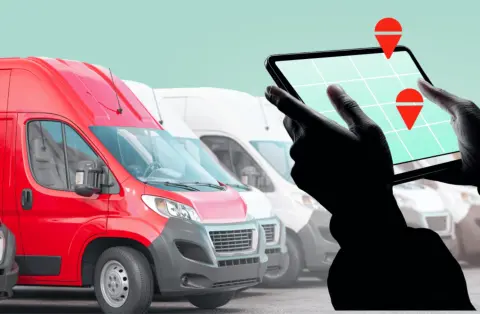


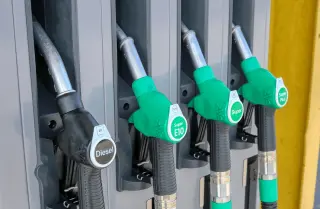
Fuel cards are one of the simplest tools a business can use to control fuel costs and reduce admin. They replace cash and expense claims with a single, managed payment solution for fuel and electric vehicle charging. For fleets, the right fuel card saves money, reduces paperwork, and makes fraud much harder.
But if you're wondering, 'What is a fuel card?' and why do businesses use them, you're in the right place. You might also be asking: How quickly can I set up a fuel card? And which fuel card provider offers the easiest onboarding process?
This guide will answer all these questions and more, helping you understand why fuel cards are revolutionising how UK businesses manage fuel expenses, offering a smarter, more efficient way to pay for fuel and EV charging and how you can get started in as little as 48 hours.
In this comprehensive guide, we'll explore what a fuel card is, how it works, its benefits, types, how to choose the perfect one for your business, and exactly how fast and easy the setup process is.
At a glance: what this guide covers
What is a fuel card and how does it work?
The benefits of fuel cards for UK businesses
Who can use fuel cards?
How quickly can I set up a fuel card?
Which fuel card provider offers the easiest onboarding process?
How to choose the right fuel card for your business
Step-by-step setup guide
Quick answer: Most businesses can set up a fuel card in 48 hours or less. The application takes under 5 minutes, and cards arrive within 7-10 working days.
The short answer to “what is a fuel card?”
A fuel card is a payment card issued to a business for buying fuel and, increasingly, EV charging. Drivers use the card at participating forecourts rather than using their own cash, petty cash or a credit or debit card.
The price they pay depends on which fuel card they use, but with a fixed weekly price card, they’ll usually save money versus the standard pump price. Transactions are recorded against the business and consolidated into a single invoice that’s paid automatically by Direct Debit.
That single invoice is the feature that makes fuel cards so useful for finance teams.
What is a fuel card?
A fuel card is a specialised, convenient payment tool designed for businesses to manage vehicle-related expenses, primarily fuel purchases for diesel, petrol, or EV charging.
Similar to credit cards, fuel cards are used by drivers to pay for fuel. However, unlike traditional credit or debit cards, fuel cards offer greater control over spending by being restricted to fleet essentials such as fuel, AdBlue, car washes, lubricants and toll payments.
You can read more in our guide, "Fuel Cards vs. Credit Cards".
Compared to alternative payment methods, fuel cards add value beyond payments as they monitor fuel usage, track spending and vehicle data and can offer savings versus the standard pump price through fixed, weekly pricing.
Additionally, fuel cards consolidate all your business's fuel spend into a single, HMRC-approved invoice, simplifying administration and eliminating the need to manage individual driver receipts and expenses.
Ultimately, fuel cards offer a range of benefits, which can be summarised as control, savings, and simplicity.
Here’s a summary of fuel card benefits:
Cost savings: Save on every litre of fuel compared to the pump price across a vast network of UK fuel stations, including fuel cards for BP, Shell, Esso, and Texaco sites with fixed, weekly pricing to reduce your fuel spend. Discounts depend on the type of fuel card you choose, with most of our customers saving every time they fill up.
Streamlined efficiency: Automated, HMRC-approved invoices eliminate the need for manual receipt tracking, saving hours of admin time. Every time a driver fills up and uses a fuel card, the transaction is added to your invoice, paid by Direct Debit – it couldn’t be simpler.
Total spending control: Set custom limits to restrict purchases to fuel, EV charging, or essentials like AdBlue, lubricants and car washes. Most of our customers restrict their fuel cards to only allow fuel purchases, preventing the opportunity for misuse.
Enhanced fleet management: Utilising fuel cards enables you to gain valuable insights into fuel consumption, driver behaviour, and route efficiency through data from our 24/7 online portal.
Fraud protection: Fuel cards are PIN-protected, embossed with driver or vehicle details, and backed by our customer theft and fraud protection, minimising misuse risks and the impact of lost or stolen fuel cards.
Fuel cards are more than just a payment method; they’re a strategic tool for cost savings, fraud prevention, and fleet optimisation. With Right Fuel Card, you gain access to a robust network, advanced analytics, and dedicated support to keep your fleet running smoothly.
How do fuel cards work?
Using a fuel card is simple for drivers and powerful for managers.
When a driver needs fuel or a charging session, they go to a participating forecourt or charge point. At the pump or charger, they present the fuel card and usually enter a PIN. The station authorises the transaction. The network records the transaction with details such as site, time, amount, and vehicle.
For the business, all transactions are written to the company account. Instead of individual receipts, the finance team receives one consolidated invoice. That invoice includes line-item detail required for HMRC VAT reclaim. Accounts then pay the invoice by Direct Debit. The card provider maintains the transaction history online, with filters for vehicle, driver, site, date and fuel type.
Behind that simple flow, there are a few common pricing and operational variations:
Fixed weekly pricing. Many business cards offer a fixed price set weekly. That gives cost predictability and often a price below the retail pump.
Pump-price cards. These let drivers pay the pump price at the site but still consolidate invoices. They give choice and wide acceptance.
Prepaid cards. The company tops up a balance in advance. This gives strict spending control and suits businesses with no credit history.
EV charge cards and hybrid cards. These work the same way for public charging. They record kWh, session length and site. Hybrid cards combine fuel and EV on one account.
For fleet managers, the key is visibility and control. Most providers give an online portal and reporting tools. Managers can set spending limits, restrict fuel types and check for unusual activity. That is where the real operational value sits, beyond the per-litre price.
Why use a fuel card? top benefits for your business
Fuel cards offer a wealth of advantages that make them indispensable for UK fleets.
Here’s how Right Fuel Card delivers value:
Cost savings
Fuel discounts: Save versus the pump price on every litre of fuel across our network of UK fuel stations, with fixed weekly prices for budget predictability.
No interest charges: Unlike company credit cards, fuel cards incur zero interest, potentially saving your business hundreds over time.
Reduced admin costs: Replace manual receipt tracking with a single invoice and Direct Debit payment, streamlining VAT reclaims, accounting and payments.
Enhanced efficiency
Time savings: Automated invoicing and digital receipt capture cut admin time.
Fleet insights: Access detailed reports on fuel consumption, driver habits, and route efficiency to optimise operations.
Paperless processes: Our automated digital management reduces manual paperwork processing.
Robust security
Fraud protection: Online account monitoring helps you detect and address suspicious activity.
PIN and registration checks: Each card is tied to a driver or vehicle, with chip-and-PIN or swipe-and-sign security.
Instant card control: Deactivate or adjust card limits instantly via the online portal.
Sustainability support
EV charging integration: Manage electric and hybrid fleets with hybrid fuel cards and EV charge cards, accepted at thousands of UK charging points.
Carbon reporting: Track emissions to meet environmental compliance and actively work to reduce your carbon footprint.
Fuel card benefits for drivers
Fuel cards are a business solution, but we know that your drivers feel the benefits too.
Here’s why:
Hassle-free payments: No need to carry cash or personal cards; present the fuel card when purchasing and pay the same as if it were a credit or debit card.
Cashless: A safer way to purchase, without carrying cash or needing petty cash from the business.
No out-of-pocket expenses: Eliminate the need for drivers to pay and reclaim their expenses, as well as the delay in expense reimbursements. Remember, not all colleagues may be in the financial position to pay upfront for their expenses.
Loyalty rewards: Earn loyalty rewards points at fuel stations when using your fuel card and redeem them for the things that matter most, an added perk that boosts engagement and morale!
Transparency: Our clear transaction records reduce potential disputes with drivers, as every purchase is tracked and verifiable.
Who Can Use Fuel Cards?
Fuel cards are extremely versatile and suit all business types. If you operate vehicles, even a single car, you can benefit from a fuel card for your business:
Self-employed and sole traders
Fuel cards are only available for businesses, not consumers, but those who are self-employed or sole traders can apply and will benefit from saving money and time to focus on what matters most: running their business.
If you’re registered for VAT, a fuel card simplifies your fuel expenses, making it easier to track mileage and claim back VAT.
We welcome businesses spending as little as £300 per month on fuel, but you get all the benefits of being a Right Fuel Card customer.
Small businesses
Running a small business typically means wearing many hats, so anything you can do to save time is important. If you can save money as well, that’s a bonus; fuel cards let you do both!
Fuel cards save money on fuel, reduce admin and offer greater control for your growing business. It doesn’t matter how many vehicles you’re running; a fuel card can benefit you.
Medium to large fleets
The benefits of fuel cards are really felt in larger fleets, particularly the cost savings. Our fuel cards offer fixed, weekly pricing that saves you money on every litre of fuel.
Large fleets with high fuel usage can save tens or hundreds of thousands of pounds with the right fuel card. Alongside this, large fleets in particular benefit from increased driver spending control and reduced admin; we’re partnered with nationwide fleets, helping them save money and time.
Businesses running HGVs benefit from specific HGV fuel cards which let them access bunker sites with high-speed pumps, higher canopies and wider lanes for larger vehicles.
As a rule, the larger and more complex your fleet, the more you stand to benefit from fuel cards.
How quickly can I set up a fuel card?
One of the most common questions businesses ask is: “How long does it actually take to get a fuel card up and running?”
The good news is that setting up a fuel card is fast and straightforward. Most UK businesses can be approved and ready to use their cards within 5–10 working days, depending on the card type and individual circumstances.
The fuel card setup process
Stage | What Happens? | Typical Time |
|---|---|---|
1. Apply | Complete the online application with your business details, estimated fuel spend, vehicles and drivers. | 5 minutes |
2. Initial Review | Our team reviews your application and checks your eligibility. We may contact you if we need any additional information. | 2–4 hours |
3. Approval | Standard cards undergo a business credit check. RightPay does not require a credit check and can often be approved within hours. | 2–48 hours |
4. Account Setup | Your account is created, portal access is provided and any spending controls are configured. | 1–2 days |
5. Card Delivery | Your cards are produced, PINs issued separately and cards sent by secure post. | 5–7 days |
6. Start Using Your Cards | Once your cards arrive, brief your drivers, activate the cards and start using them at participating stations. | Same day |
How Long Will It Take?
The exact timeframe depends on the card you choose:
RightPay prepaid: Approval can often be completed within 2–4 hours, with physical cards typically arriving within 5–7 working days.
Standard fuel cards: Credit approval usually takes 24–48 hours, followed by 5–7 working days for card delivery.
Established businesses: Businesses with a strong credit history may be approved the same day, meaning cards can potentially be in your hands within 5 working days.
Quick answer: Most businesses can expect their fuel cards within 5–10 working days, while RightPay can offer faster approval for businesses that don't want to undergo a credit check.
What could delay your application?
A few things can affect how quickly your fuel cards arrive. Incomplete or inaccurate application details can lead to additional verification, while newer businesses or those with limited credit history may require further checks. Delivery can also take slightly longer for rural addresses, weekends and UK bank holidays. The easiest way to avoid delays? Have your company registration details, bank details, estimated fuel spend and vehicle information ready before applying.
Can I get a fuel card in less than 48 hours?
You can get approved in less than 48 hours, but physical cards still need to be produced and delivered.
With RightPay, approval can often happen within 2–4 hours during business hours. Physical cards typically arrive within 5–7 working days.
If you need fuel cards urgently, contact our team to discuss the options available, including whether expedited production or delivery may be possible.
What happens once my cards arrive?
Getting started is straightforward. Once your cards arrive, you'll be able to access your online account, set spending controls and assign cards to individual drivers or vehicles.
Your drivers can then begin using their cards at participating fuel stations. Transactions are recorded automatically, allowing you to monitor fuel spending, manage your fleet and keep your fuel costs under control.
The benefits for business explained in plain terms
Fuel cards deliver value at three levels: cost, process, and control.
First, cost. Many fuel cards offer prices below the public pump price. Even a few pence saved per litre adds up across a fleet. That saving is direct, measurable and repeatable.
Second, process. Paper receipts and driver expense claims are a hidden cost. Fuel cards replace that mess with one invoice and standardised data. Accounts teams spend fewer hours reconciling. VAT reclaim becomes straightforward because invoices show the right information.
Third, control. Cards are issued per driver or vehicle. Each card can be PIN-protected. Managers set limits by value, by fuel type and by location. If a card is lost, it is blocked instantly. These controls reduce fraud and misuse.
To make this concrete, here is a small worked example calculated step by step:
Assume a fleet of 10 vans, each using an average of 100 litres of fuel per week.
That is:
10 vans × 100 litres = 1,000 litres per week.
If a fuel card saves 6 pence per litre, the weekly saving is:
1,000 litres × £0.06 = £60.00.
Annualised, multiply by 52 weeks:
£60.00 × 52 = £3,120 saved on fuel costs per year.
Let’s now add administrative savings. If the fuel card reduces one person’s admin time by 2 hours per week and that person’s time costs £20 per hour, the weekly admin saving is:
2 hours × £20 = £40 per week.
Annual admin saving:
£40 × 52 = £2,080 per year.
Combined, these simple assumptions give:
£3,120 + £2,080 = £5,200 annual benefit for your business using a fuel card.
Where can I use a fuel card?
Across our range, Right Fuel Cards offers leading convenience with accepted sites covering 98% of UK fuel stations, including major brands like BP, Shell, Esso, Texaco and supermarket forecourts. This extensive network ensures your drivers can refuel without deviating from their routes, minimising downtime and boosting operational efficiency.
Plus, our fixed, weekly priced fuel cards mean you're saving versus the pump price on every litre of fuel purchased.
For fleets transitioning to electric vehicles (EVs), we offer a range of hybrid cards that enable fuel and EV charging and Rightcharge, our public charging card with home reimbursement built in.
Right Fuel Card is the ideal partner for transitioning fleets – offering solutions that combine all your fuel and EV charging spend into one, simple bill, ensuring cost-effective refuelling and recharging, wherever your drivers need to be.
How to choose the right fuel card
Selecting the best fuel card starts with mapping needs to features.
Ask these questions:
First, where do your drivers refuel? If they stick to one branded network, a branded card may be the simplest. If they travel widely, a multi-network option will reduce detours.
Second, what vehicles do you run? HGVs need bunker and HGV-friendly sites. Small vans may be fine with supermarket coverage. If your fleet contains EVs, prioritise cards that support charging networks and home charging reimbursement.
Third, what pricing model matches your budget? Fixed weekly pricing gives predictability and often savings for high-volume fleets. Pump-price cards give flexibility for low-volume or irregular fuelling.
Fourth, what admin features do you require? Look for online reporting, HMRC-approved invoices, and integration with your accounting or fleet management software. The easier it is to export and reconcile data, the more time you save.
Fifth, check security features. PIN protection, spend limits, geographical controls, and instant card cancellation are essential.
Finally, test the provider. A trial or short setup period can reveal whether the network coverage, service and reporting meet your expectations.
Common pitfalls to avoid
A few issues cause friction more often than others.
Do not pick a card on headline price alone. A low per-litre price is worthless if the network forces drivers to take lengthy detours.
Watch for hidden charges. Some providers apply network or transaction fees that undermine nominal savings. Confirm whether there are joining fees, replacement card fees, paper invoice fees or termination costs.
Check the acceptance of your main routes. Use the provider’s site locator and cross-check a list of actual routes your drivers use.
For EVs, check how home charging is verified and reimbursed. An incomplete reimbursement scheme creates disputes and extra admin.
Finally, ensure credit or deposit requirements match your cash flow. Some providers require a security deposit or set credit limits at onboarding.
Switching fuel card provider? Some practical points
If you switch fuel card providers, plan the change. Map current fuel card sites where your drivers refuel and confirm equivalent coverage with the new provider. Communicate the change clearly to drivers. Arrange an overlapping period if possible. Cancel old cards only after the new cards are distributed and tested.
Ask your new provider for onboarding support and for a named account manager. A smooth transition minimises downtime and avoids billing surprises.
Ready to apply? What to do next
If this guide has helped you see the benefits, taking the next step is simple.
Start by mapping your fleet. Note vehicle types, typical routes and how often staff refuel or charge. Use those facts to compare cards on coverage, pricing model and reporting. If you want a quick match, use Right Fuel Card’s Fuel Card Comparison to see options that suit your fleet.
When you are ready, apply online. Applications usually take only a few minutes. Approval times vary, but many businesses get a response within 48 hours. Once approved, we’ll deliver cards within 7–10 working days. Set the controls you require, brief your drivers and monitor the account in the portal.
If you need a little help, speak with our UK-based team. We will review your fleet profile, recommend card options, and help set limits and reporting to match your accounts and compliance needs.
The bottom line: Fast, easy setup that saves you money
Fuel cards are a practical, low-risk way to bring transparency and savings to fleet fuel and energy spending. They're especially valuable for businesses that want predictable costs, reduced admin and better control.
And the best part? Getting started is fast and easy:
5-minute online application
Approval within 24-48 hours (2-4 hours for RightPay)
Cards delivered within 5-7 working days
Start saving from your first fill-up
No complicated paperwork. No lengthy delays. No confusing processes.
With hybrid and EV-capable cards now widely available, fuel cards will remain central to fleet cost management for the foreseeable future.
The question isn't whether you should get a fuel card, it's how quickly you want to start saving.
Frequently asked questions about fuel card setup and onboarding
How quickly can I set up a fuel card?
Most UK businesses can set up a fuel card within 7-10 working days from application to first use. The application takes under 5 minutes, approval typically comes within 24-48 hours, and cards arrive within 5-7 working days after approval.
For RightPay prepaid cards, the process is even faster with approval often within 2-4 hours and no credit check required.
Timeline summary:
Application: 5 minutes
Approval: 24-48 hours (2-4 hours for RightPay)
Card delivery: 5-7 working days
Total: 7-10 working days (5-7 for RightPay)
Which fuel card provider offers the easiest onboarding process?
Right Fuel Card is designed to offer one of the easiest onboarding processes in the UK with:
✅ 5-minute online application
✅ Approval within 24-48 hours (2-4 hours for RightPay)
✅ Minimal documentation required
✅ Dedicated account manager from day one
✅ Intuitive online portal
✅ Proactive communication at every stage
✅ Comprehensive onboarding support
Unlike many providers who require extensive paperwork and take 2-3 weeks, we've streamlined the process to get you saving money as quickly as possible.
What information do I need to apply for a fuel card?
To apply for a fuel card, you'll need:
Company registration number
Business address
VAT registration number (if applicable)
Estimated monthly fuel spend
Number of vehicles and drivers
Bank account details for Direct Debit (unless applying for RightPay)
Contact information
The application takes under 5 minutes and can be completed entirely online.
Can I get a fuel card without a credit check?
Yes. RightPay is our prepaid fuel card option that requires no credit check. It's perfect for:
Startups and new businesses
Businesses with limited credit history
Companies building or rebuilding credit
Businesses wanting absolute spending control
RightPay offers all the same benefits as standard fuel cards (savings, control, simplified admin) but with a prepaid model, you top up your balance in advance.
Approval time for RightPay: 2-4 hours (often same day)
How long does fuel card approval take?
Standard credit cards: 24-48 hours for most businesses (often same day for established businesses with good credit)
RightPay prepaid cards: 2-4 hours during business hours (no credit check required)
We'll communicate the decision clearly and offer alternative options if standard approval isn't possible.
What happens if my fuel card application is declined?
If your application for a standard credit card is declined, we'll:
Explain the reason clearly
Offer alternative options (such as RightPay prepaid)
Suggest a reduced credit limit or security deposit option
Provide guidance on reapplying in the future
Most businesses can still get a fuel card through RightPay, which requires no credit check and offers the same benefits.
Can I start using my fuel card immediately after approval?
No, you'll need to wait for your physical cards to arrive (5-7 working days after approval). However, once you receive your cards:
Standard cards: Activate and use immediately at participating stations
RightPay cards: Top up your balance online or by phone, then use immediately
Some providers offer digital/virtual cards for immediate use while you wait for physical cards, contact our team to ask about availability.
How do I activate my fuel cards when they arrive?
Activation is simple:
Standard cards:
Receive cards by secure post
Receive PIN numbers separately (usually next day)
Log in to your online portal
Assign cards to drivers or vehicles
Set any spending controls or restrictions
Brief your drivers on card usage
Start using cards immediately at participating stations
RightPay cards:
Receive cards by secure post
Receive PIN numbers separately
Log in to your online portal
Top up your balance (online, phone, or bank transfer)
Assign cards and set controls
Start using cards immediately
Total activation time: 30 minutes to 1 hour
Do you provide support during the onboarding process?
Yes, absolutely. Every Right Fuel Card customer receives:
Dedicated account manager assigned from day one
Welcome pack with clear instructions
Access to our UK-based support team (phone, email, live chat)
Driver briefing materials
Video tutorials for the online portal
Optional onboarding call to walk you through setup
You're never left to figure things out alone, we're here to help at every stage.
Can I add more cards after my initial setup?
Yes, you can add cards at any time through your online portal or by contacting your account manager. Additional cards are typically delivered within 5-7 working days.
There's no limit to how many cards you can have, and you can add or remove cards as your fleet grows or changes.
What if I need fuel cards urgently?
If you need cards urgently:
Choose RightPay for fastest approval (2-4 hours, no credit check)
Apply early in the week (Monday-Wednesday for fastest processing)
Contact our team about expedited card production and express delivery options
Have all information ready to avoid delays
In some cases, we can expedite the process. Contact us on 0113 202 5110 to discuss urgent requirements.
How to Get Started with Right Fuel Card
Switching to Right Fuel Card is simple and fast:
Compare Cards: Use our Fuel Card Comparison Tool to match your fleet’s needs, size, fuel type, or routes.
Apply Online: Submit your application in under 5 minutes. No credit history? Explore RightPay’s prepaid card option.
Get Approved: Approvals take ~48 hours, with options for full/reduced credit limits, security deposits, or RightPay.
Start Saving: Receive cards within 7–10 working days, top up (for RightPay), and with our range of fuel cards, refuel at 98% of UK fuel stations, with most customers saving versus the standard pump price.