


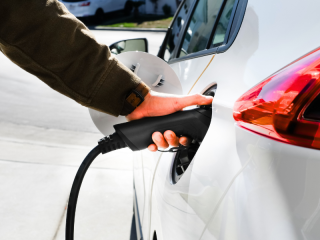
Electric cars are becoming an increasingly common sight on UK roads. Lower running costs, reduced emissions and improved charging infrastructure have made them an attractive alternative to petrol and diesel vehicles.
However, they're not the right choice for everyone. Higher purchase prices, charging times and range limitations can still make traditional vehicles the better option for some drivers and businesses.
In this guide, we'll explore the advantages and disadvantages of electric cars, helping you decide whether switching to an EV is the right choice.
What is an electric vehicle?
Unlike petrol and diesel vehicles, which run on an internal combustion engine (ICE), EVs use an electric motor which is powered by electric batteries. There are several types of EVs available, including fully electric vehicles (BEVs), plug-in hybrid vehicles (PHEVs) and self-charging hybrid vehicles.
Hybrid vehicles are often viewed as a stepping stone to BEVs, as they can reduce carbon emissions without relying wholly on the electric motor. However, it’s important to note that hybrids are not exempt from the 2030 ban on new petrol and diesel vehicles, so will only be a short-term solution for businesses.
Advantages of electric cars
Electric vehicles have been growing in popularity every year, and there are now over 780,000 fully electric cars on UK roads.
To meet the growing demand, significant investment has been put into the expansion of the EV infrastructure. This helps to make EVs a much more practical choice for businesses, so it’s the perfect time to consider electrifying your fleet.
Read our guide for more reasons for businesses to go electric.
Environmental benefits
Electric cars can help reduce the environmental impact of road transport by:
Producing zero tailpipe emissions
Improving air quality in towns and cities
Reducing noise pollution
Using regenerative braking to improve efficiency
Reducing reliance on fossil fuels.
Cost savings
Although electric vehicles typically have higher upfront costs, they do offer cost savings for businesses.
Tax benefits
Electric company cars continue to benefit from some of the lowest Benefit-in-Kind (BiK) tax rates available, although rates are increasing gradually over the coming years. In comparison, the BIK rate for diesel vehicles can be as high as 37%. Since April 2025, electric cars are no longer exempt from Vehicle Excise Duty (VED), although they may still benefit from lower company car taxation compared with petrol and diesel vehicles.
Service and maintenance
EVs have fewer moving parts, so they require less maintenance than petrol and diesel vehicles. This can save businesses a significant amount of money on servicing and maintenance costs. Learn more about this with our guide to EV maintenance.
Clean air zones
Urban areas are introducing clean air zones to help tackle climate change. For drivers who frequently visit these large cities, the cost of fines can add up. By having an EV, you can access clean air zones freely, and you’re also exempt from the London Congestion Charge.
Better driving experience
One of the biggest electric car benefits is the driving experience. Electric motors deliver instant torque, making acceleration smooth and responsive. They are also quieter than petrol and diesel vehicles, creating a more comfortable drive.
Home charging convenience
Many EV owners charge overnight at home, meaning they can begin each day with a full battery rather than making regular trips to a petrol station. For businesses with depot charging, this can simplify fleet operations.
Technological advancements
Significant progress has been made with EV technology over the last few years. Customer surveys have highlighted that drivers have concerns about the driving range of electric vehicles and the limited infrastructure.
However, the number of public charge points has increased by 43% since May 2023, making it much more practical to switch to electric. The average driving range has also increased with EVs now offering almost 300 miles on a single charge.
The continuous innovation in battery technology will lead to even longer ranges and faster charging times, so there’s never been a better time to consider an electric vehicle.
Disadvantages of electric cars
While EVs offer significant environmental advantages and lower operating costs, they also come with several disadvantages. These include the limited charging infrastructure, high upfront costs, and concerns over battery life.
Range limitations
Although there have been advancements in the driving range of EVs, it is still considered too limited for some drivers. For those who travel nationwide, multiple stops would be needed to recharge. This adds downtime to journeys and can cause delays for deliveries, impacting profits.
There are also concerns about the longevity of electric vehicles. Over time, the capacity of EV batteries can degrade, reducing their driving range. This is impractical and costly for businesses, as replacements are often expensive.
While home charging is usually the cheapest option, rapid public chargers can cost considerably more per kWh, making long-distance journeys more expensive.
Higher upfront costs
Purchase costs for electric vehicles tend to cost 35% more on average than their petrol and diesel counterparts. This is largely due to the high cost of EV batteries. As EVs are more expensive to purchase, their insurance premiums tend to be higher. With their advanced technology and parts, repairs can be costly in the event of a claim, higher insurance costs help to mitigate this.
Upfront costs also include the installation of private charge points. For home chargers, this currently costs around £1000 and for EV chargers at a workplace this can go up to £1500. If funds are limited then drivers can rely on public charge points instead, using their EV charge card for payment.
Some businesses are unable to warrant the significant investment needed to switch fleets to electric. However, in the long-term running costs will be reduced and, as the EV market grows, upfront costs should decline, particularly for second-hand models.
Limited model choice
Although improving rapidly, some vehicle types still have fewer electric options available, particularly:
Pickups
Larger vans
Specialist commercial vehicles
HGVs
Charging time
Charging an EV takes significantly longer than refuelling a conventional vehicle, even with fast-charging stations. At some public charge points, you can now gain up to 100 miles of range in around 35 minutes. Although this does show progress, it is still too impractical for business drivers on the move.
In addition, EV charge points are still lacking in more rural areas. This increases the risk of “range anxiety” and puts pressure on drivers to use home charging points instead which is not always possible.
Environmental impact of battery production
One of the main concerns drivers have for electric vehicles is the environmental impact of battery production and disposal. EV batteries are produced by mining and processing raw materials, such as lithium, cobalt, and nickel, which have a high environmental cost.
Proper recycling and disposal methods are necessary to mitigate this impact. While battery recycling technology is improving, it’s not yet widely implemented.
Although battery production has a higher environmental impact than manufacturing a petrol or diesel vehicle, most studies show that electric cars produce fewer lifetime emissions once they're driven for several years, particularly when charged using low-carbon electricity.
Is an Electric Car Worth It?
Whether an electric car is the right choice depends on how and where you drive.
If most of your journeys are local, you have access to reliable charging and want to reduce running costs, an EV could be an excellent investment.
On the other hand, drivers who regularly travel long distances, operate heavy commercial vehicles or have limited access to charging may find petrol, diesel or alternative fuels more practical for now.
As charging infrastructure continues to improve and manufacturers release more models, many of today's disadvantages are becoming less significant.
If you're preparing your business for the move to electric vehicles, Right Fuel Card can help. From EV charge cards to practical fleet guidance, we support businesses throughout their transition to lower-emission driving.
FAQs
Is it really worth having an electric vehicle?
Having an electric vehicle can help you reduce emissions and save money long-term on running costs. However, for fleets with HGVs, future fuels such as hydrogen or HVO could be more practical alternatives.
What is the range of electric vehicles?
The range of electric vehicles depends on the model and size. On average, you could expect a driving range of around 200 miles.
How do you charge an electric vehicle?
Charging an electric vehicle is simple, regardless of whether you use a public charge point or a home charger. You just need to plug in your charge cable into the socket of the EV charger and then, if using a participating location, you can tap your RFID reader with your EV charge card.
How much does it cost to charge an electric vehicle?
The cost of charging an electric vehicle depends on the type and location of the EV charger used. Home chargers are much cheaper to use than public charge points, but they are much slower as a result.